Inbound enquiry triage
Answer the right enquiry first, not the loudest one
Enquiries arrive on the website form, in a shared inbox, and on the phone, and the one that gets answered fastest is usually the one that happened to land in front of someone. Triage is a rule, not a reflex. I write the rule down, build the routing that applies it, and leave the reply itself with a person.
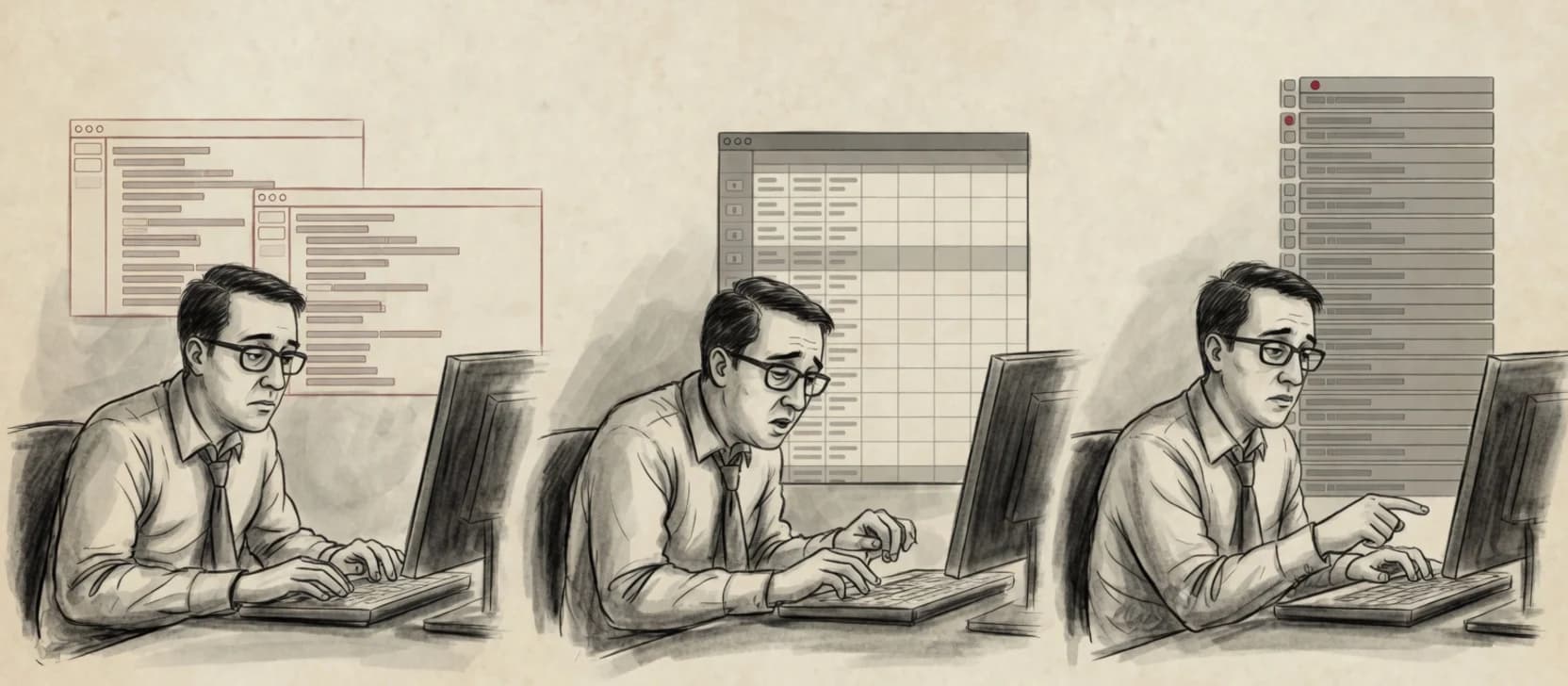
One queue
Every channel lands in the same place with the same fields, so nothing is answered twice or not at all.
Written routing rule
What counts as urgent, and who owns each kind of enquiry, is documented before anything routes.
People send replies
A draft can be prepared. Sending it, and anything it commits you to, stays with a person.
Client-owned handover
You receive the workflow, the routing rule, the credentials map, and the rollback path.
Chapter 01
Map the work
Start with the process, not the tool
01
Find every way in
Trace the form, the shared inbox, the personal inboxes people gave out, the phone message, and whatever a partner or referrer uses to send you work.02
Write the rule people already follow
Ask what makes an enquiry urgent, who the right owner is, and what a good first reply contains. Most firms have this rule; almost none have it written down.03
Separate sorting from answering
Classifying and routing can be mechanical. Judging what an enquiry is worth, and what to promise, is not.
Zoevin’s automation service is new and has not delivered a client engagement yet. My experience comes from building automation in salaried in-house roles.
Chapter 02
Build the right path
A bounded workflow with an owner
01
Consolidate the channels
Bring each intake path into a single queue with a consistent record, so the same enquiry arriving twice is recognisable as one thing.02
Apply the routing rule
Classify by service line and urgency, assign a named owner, and attach the context that owner needs to answer without going hunting.03
Prepare, never send
Where a first reply is genuinely templated, prepare a draft for review. The workflow does not send it and does not commit you to scope, price, or a date.
Chapter 03
Prove and hand over
Acceptance is more than a happy path
Nothing lands in only one person's inbox
Every channel reaches the queue, and an enquiry is visible to more than the person who happened to receive it.Misrouting is visible
An enquiry the rule cannot classify stops in an unassigned state that someone reviews, rather than being filed under a wrong guess.The manual path still works
The queue can be paused and the team can go back to the documented manual method without losing an enquiry.
You receive the process map, decision memo, workflow export, access and secrets design, failure register, runbook, rollback, and handover record. See a fictional example of that artifact set.
Before we start
Know the boundaries
When this is the wrong buy
Your enquiry volume is small
If a person can comfortably see everything that arrived today, a shared inbox and an agreed rule may be the whole answer. That advice is free.Nobody agrees what urgent means
Routing encodes a decision. If the partners disagree about which enquiries matter, settle that first — automation will simply apply the disagreement faster.You want it to reply on its own
The workflow does not answer prospects, quote, or commit to a timeline. Those are decisions a person is accountable for.
Next step
Bring the real workflow to a fit consult
Bring the systems involved, the person who does the work, and an example of an exception. The first answer may be a setting you already own. If mapping is worthwhile, the next step is a fixed-scope discovery.