Record sync and intake
Stop retyping records across two systems
When one fact is entered twice, the issue is rarely typing speed. It is an unclear source of truth, a missing handoff rule, or an exception nobody owns. I map that handoff, decide what can move safely, and build the smallest reliable path.
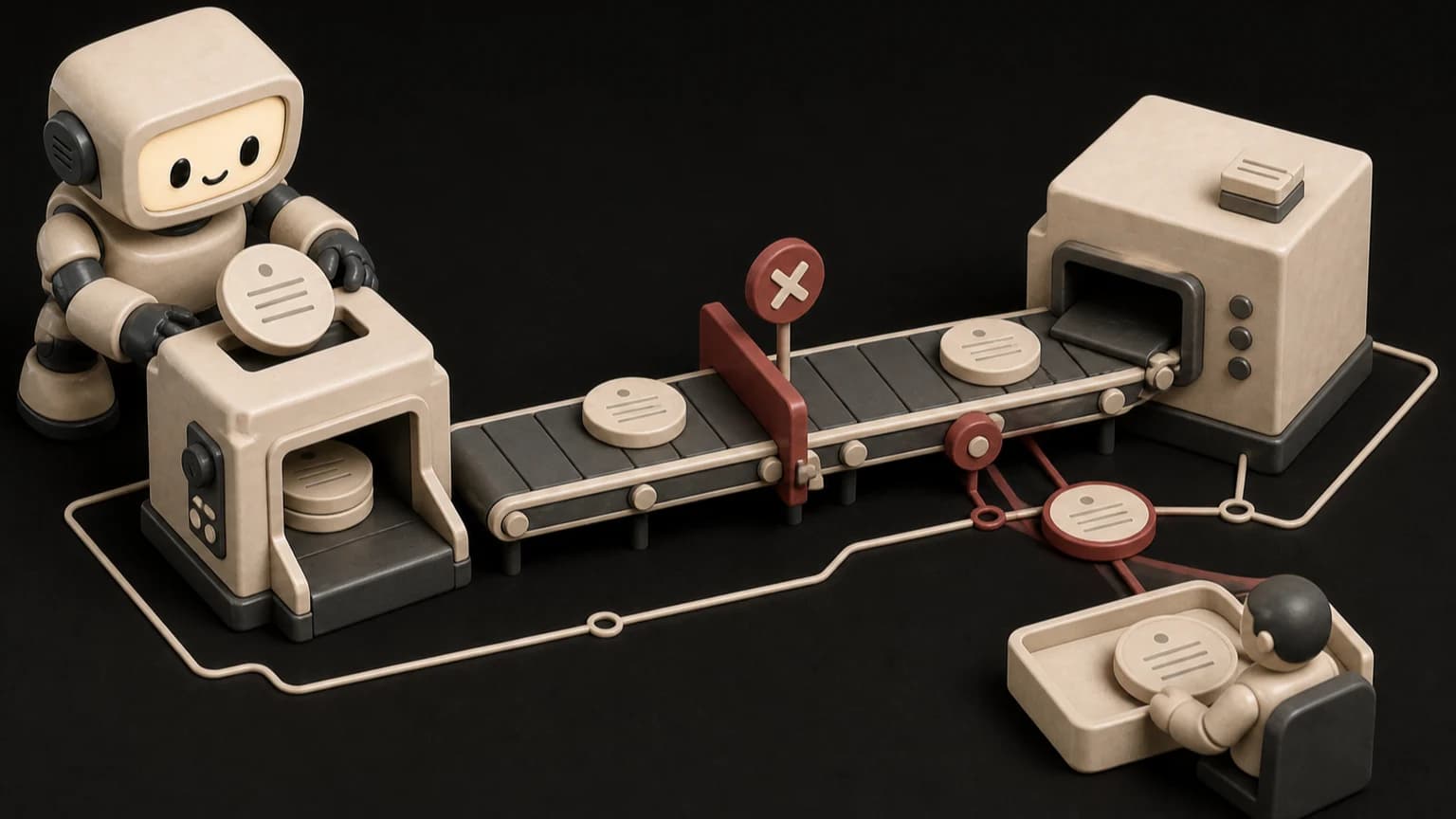
One source of truth
The record has a home. The other system receives a controlled copy.
Human exceptions
Missing, conflicting, or uncertain data waits for the person who owns it.
No silent duplicates
A unique-record rule and a visible exception path come before live use.
Client-owned handover
You receive the workflow, credentials map, runbook, and rollback.
Chapter 01
Map the work
Start with the process, not the tool
01
Find the real source
Trace where the record first becomes trustworthy, who changes it, and which system is allowed to create the next record.02
Separate copies from decisions
Move routine fields when the rule is clear. Keep matching, approval, and judgment with the person accountable for the result.03
Name every exception
Missing IDs, changed names, duplicate submissions, and conflicting values need a queue and an owner, not a guess.
Zoevin’s automation service is new and has not delivered a client engagement yet. My experience comes from building automation in salaried in-house roles.
Chapter 02
Build the right path
A bounded workflow with an owner
01
Map the handoff
Document trigger, required fields, system-of-record rule, destination, exception path, and the person who closes the loop.02
Build the guarded transfer
Use the platform that already fits the stack, with field mapping, duplicate checks, a clear audit trail, and least-privilege access.03
Prove the edge cases
Test a clean record, an update, a duplicate, incomplete source data, and an unavailable destination before the team relies on it.
Chapter 03
Prove and hand over
Acceptance is more than a happy path
A clean record arrives once
The destination receives the intended fields with a traceable source identifier.A duplicate stops visibly
The workflow does not create a second record while hiding the reason it stopped.Manual work remains possible
The owner can pause the handoff and use the written manual path without losing source information.
You receive the process map, decision memo, workflow export, access and secrets design, failure register, runbook, rollback, and handover record. See a fictional example of that artifact set.
Before we start
Know the boundaries
When this is the wrong buy
One built-in setting fixes it
If your current software already offers the handoff, the honest recommendation is to configure that feature rather than build around it.The records cannot be identified
A sync cannot safely decide whether two records are the same without a usable identifier or an accountable person to resolve matches.Nobody owns the destination
If no one can answer what a correct record looks like, the process needs ownership before it needs automation.
Next step
Bring the real workflow to a fit consult
Bring the systems involved, the person who does the work, and an example of an exception. The first answer may be a setting you already own. If mapping is worthwhile, the next step is a fixed-scope discovery.